Artwork That Represents the Seven Deadly Sins Seven Deadly Sins Art Exhibition
The image of Adam and Eve in the Garden of Eden, caught in the decisive moment of temptation, is possibly one of the most iconic representations of sin. One of Lucas Cranach the elder'due south numerous depictions of the fallen pair is currently on show as function of a special exhibition at The National Gallery, London, which brings together piece of work past Bruegel, Titian, and Velázquez, among others. Curated by Dr Joost Joustra, 'Sin' seeks to expect at 'circuitous theological ideas and depictions of 'sinful' everyday behaviour that blur the boundaries betwixt religious and secular art.'
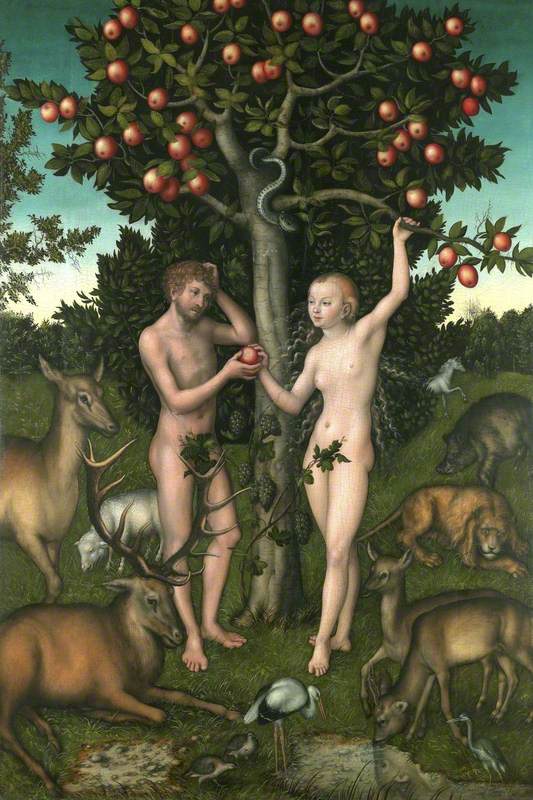
Adam and Eve 1526
Lucas Cranach the elderberry (1472–1553)
The Courtauld, London (Samuel Courtauld Trust)
In early on Christianity, a sin was considered a transgression against divine law, with individuals believing that certain behaviours would destroy the relationship between man and God. These were grouped into a prepare of vices — lust, gluttony, greed, sloth, pride, wrath, and envy — otherwise known equally the vii 'deadly' or 'cardinal' sins. The upstanding struggle between vice and virtue was fertile territory for the artistic imagination. Artists became preoccupied with portraying human fallibility in their work, just as order became more than secular, these allegorical representations became less fashionable.
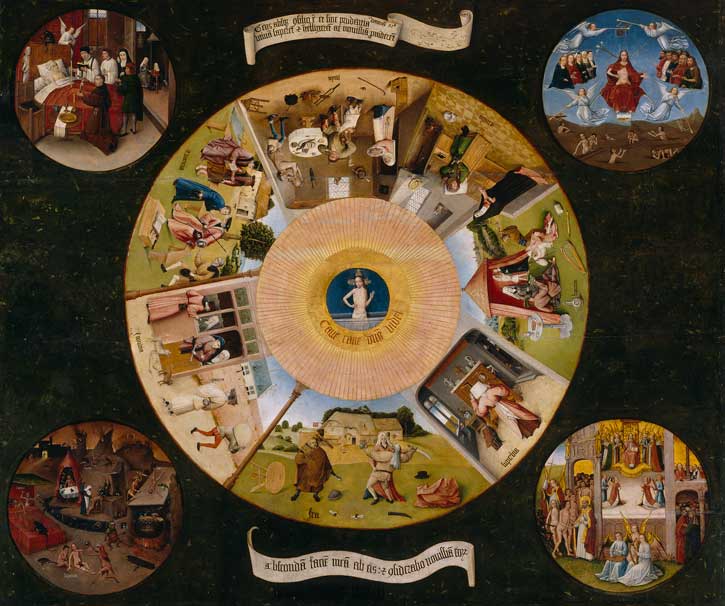
The Seven Deadly Sins
c.1505–1510, oil on panel by Hieronymous Bosch (c.1450–1516)
William Hogarth's The Tête à Tête painting from the 'Marriage A–la–Mode' series is included in the exhibition. Afterward the success of his subsequent moral tales, A Harlot's Progress (1732) and A Rake'southward Progress (1735), 'Marriage A–la–Mode' satirised an arranged spousal relationship. In the 2d painting, the newly wedded are exposed every bit a 'couple of convenience'.
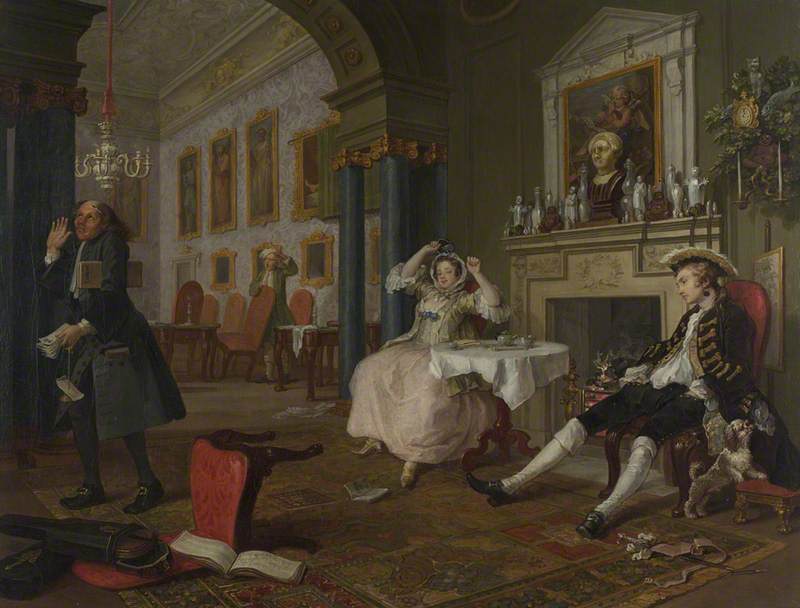
The house is in a state of disorder, with knocked chairs and unpaid bills. The Viscount is shown exhausted, perhaps from a night spent at a brothel, due to the big black spot on his neck, a sign that he has caught syphilis. The pet canis familiaris is shown sniffing the lady's cap he has stuffed in his pocket, which is further evidence of his adultery. The Viscountess is having tea for ane, representative of her own independent being, while her slouched posture and unkempt manner is an indication of her ain unfaithfulness. In addition to criticising their lustful habits, there are other symbols that pertain to additional vices, such as the broken sword from a fight (wrath) and their delectation with domestic squalor (sloth).
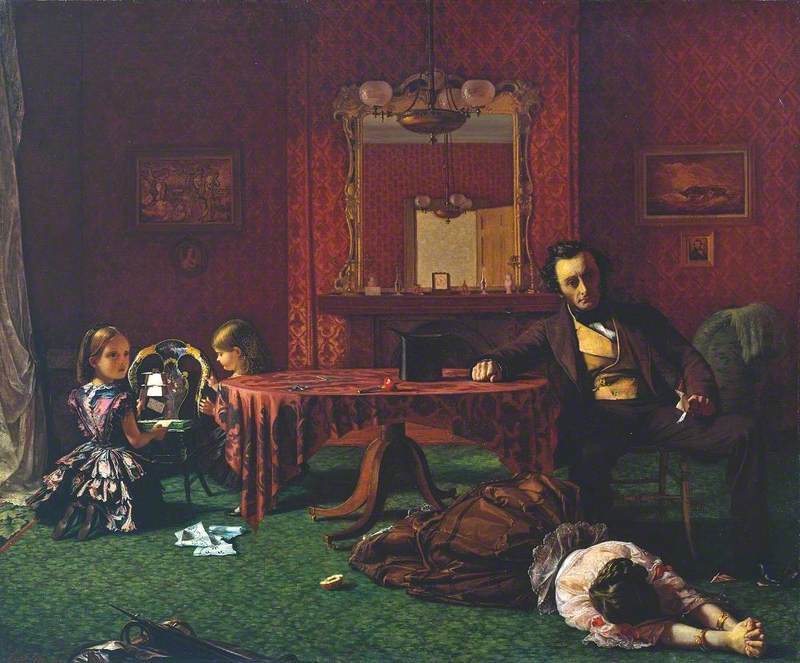
In Augustus Leopold Egg's 1858 depiction of female infidelity, Past and Present, No. 1, the wife is shown lying at her married man's feet: a literalisation of 'the fallen woman'. While men had mistresses in the Victoria era, adultery in women was regarded as a reprehensible crime. In the painting, the husband, belongings the letter of the alphabet which exposes her thing, stamps on a miniature portrait of her extramarital lover. Behind the children, a house of cards is shown collapsed (fallen cards also appear in Hogarth's painting), being balanced on a volume by Balzac, known for his literary depictions of adultery.
The picture show on the left–hand side of the wall depicts the expulsion of Adam and Eve from the Garden of Eden: the original sin. In an extension of this Biblical tale, an apple tree is shown cutting in two. 1 half is rotting on the floor (a representation of the wife) while the other half is shown with a pocketknife stabbed into its core (representing the betrayed hubby).
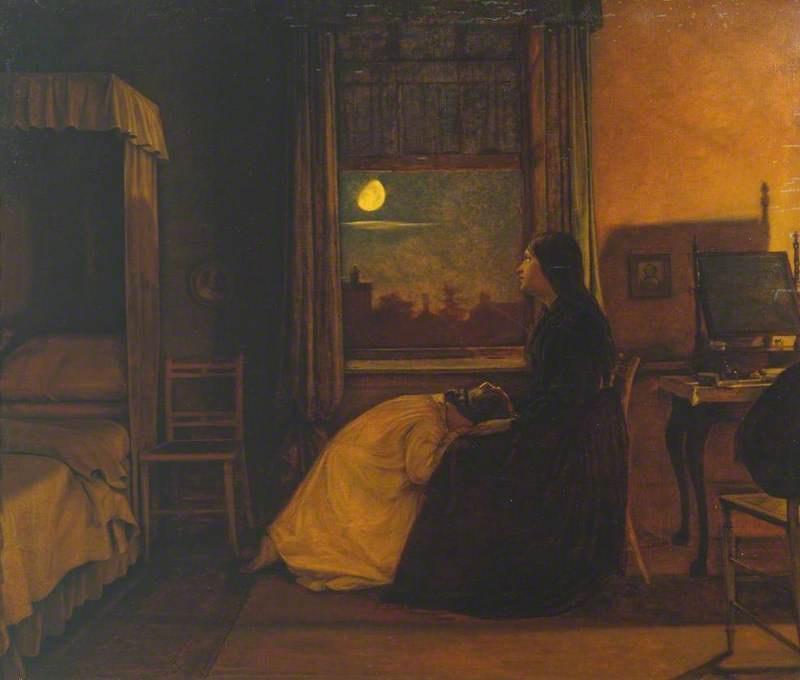
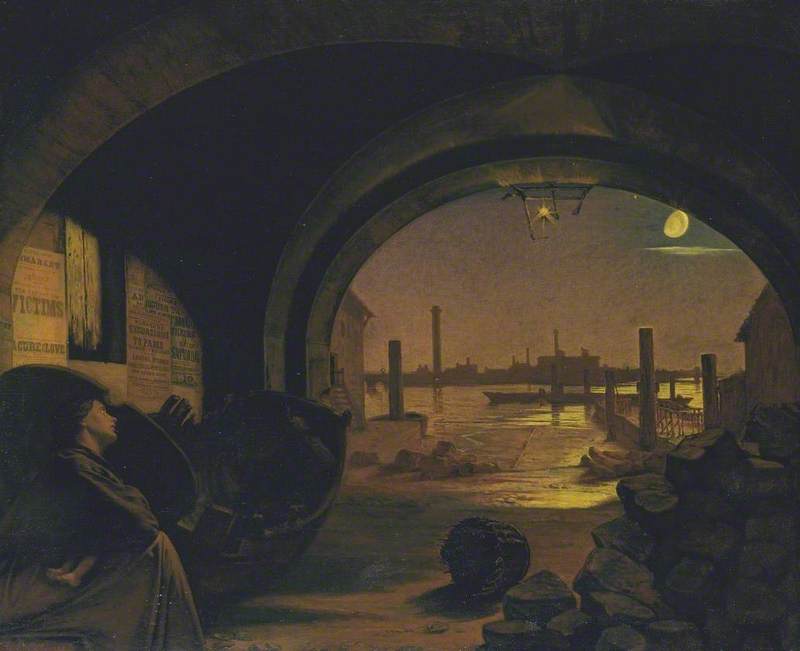
The 2nd painting, Past and Present, No. ii, shows the miserable daughters orphaned in a cold garret, whereas Past and Present, No. three, shows how the mother, now destitute, was forced to take refuge under ane of the Adelphi arches.
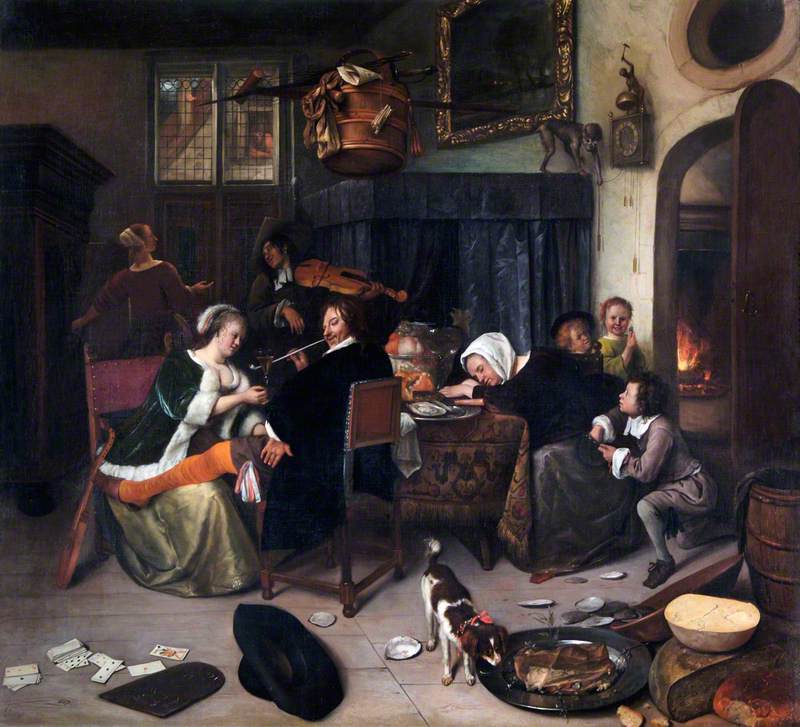
Jan Steen's The Dissolute Household, made in the 1660s, paints a comedic motion picture of sinful gluttony, overconsumption, and revelry, with individuals indulging in excess food, beverage, and sex. Made inside the artistic tradition of Dutch moral painting, which often took a more light-hearted approach, Steen depicts the mother existence pickpocketed as she falls asleep in a drunken shock, while the primary of the house engages in sexual acts at the other terminate of the table. While they are distracted, a fire has accidentally sparked next door, the dog is eating a platter of meat, and the maid (holding a necklace she has stolen) entertains a fiddler. The reality of an ominous fate hangs over the family's reckless heads, in the course of a wooden tub filled with symbolic objects. In that location is a clapper, which would have been used to give warning of contagious diseases, such equally plague, while the birch co-operative represents justice and punishment.
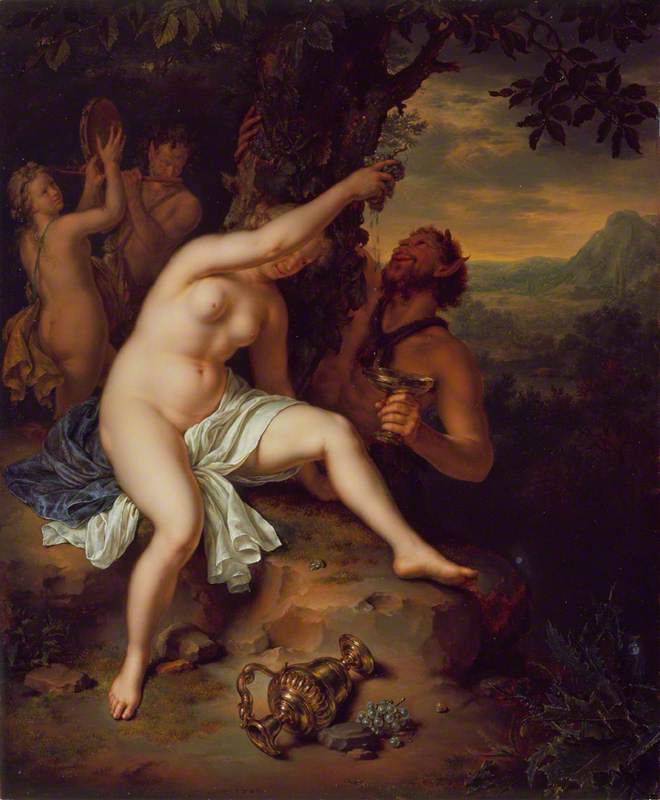
Gluttony and greed were often depicted in art through Dionysus and Bacchus, the Greek and Roman gods of wine. In this licentious Bacchanalian Scene, painted by Willem van Mieris, a naked 'bacchante' (female devotee) is squeezing a bunch of grapes into a cup, while another revels in intoxicated abandonment, dancing and beating a tambourine.
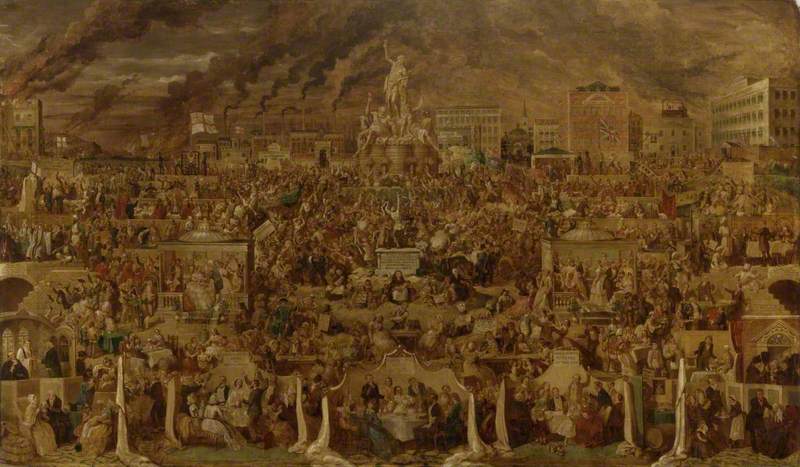
Victorian artist George Cruikshank's vast, panoramic portrait The Worship of Bacchus (1860–1862) contained numerous scenes representing the ill effects of excessive drinking. The work painted society as being destroyed by its collective want for booze, in the promise that British viewers might be persuaded to live a more than favourable life of abstinence. Rather than excessive alcohol or food, other artists were disquisitional of those who were greedy for possessions and hoarded their wealth.
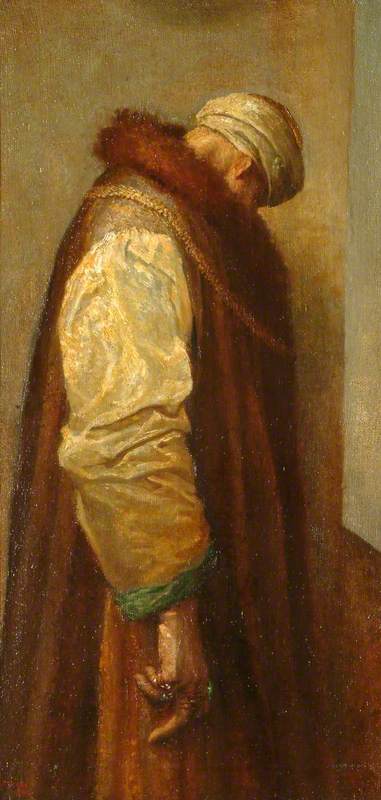
The title of George Frederick Watts' 1894 painting 'For he had great possessions' was taken from the Biblical story of the rich human being who approached Christ asking to become a disciple. When told that he must first sell all his worldly property, he refused, rejecting the spiritual path in favour of his desire for material appurtenances.
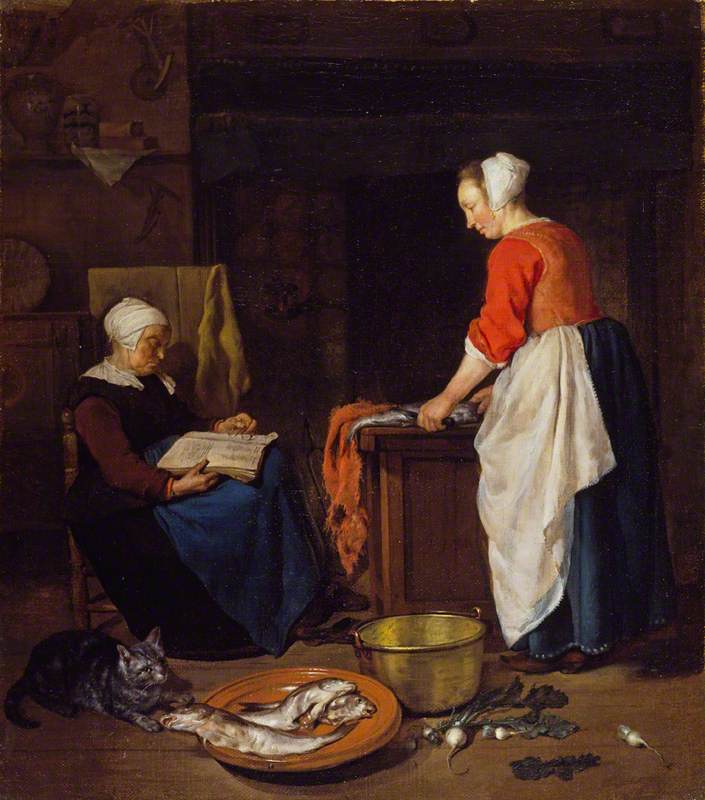
Dutch artist Gabriel Metsu's An Former Adult female Asleep (1657–1662) is a visual representation of the sin of sloth: an erstwhile woman has fallen asleep while reading the Bible. The negligence of her deportment is embodied by the hungry cat at her feet, about to pounce on the plate of fish. Akin to Steen'south painting of the dissolute household, Metsu approached lax moral behaviour with adept humour. In the before painting, 2 Men with a Sleeping Woman (1655–1660), a woman is shown fallen asleep drunk at a tavern. The cards and backgammon are indicators that she has been gambling, in addition to the smoking pipe, which would have been particularly frowned open, equally tobacco was considered an aphrodisiac.
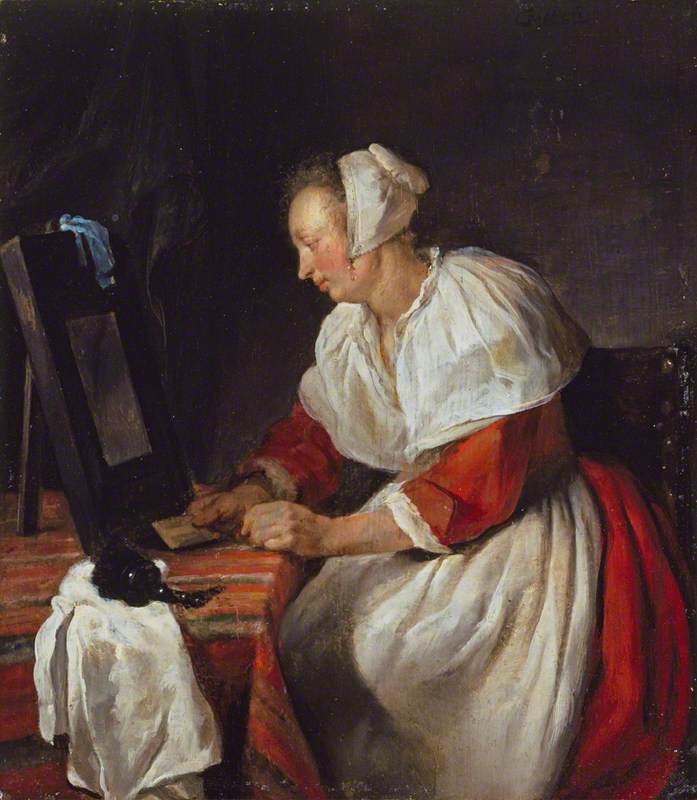
Metsu too represented in the sin of pride in A Woman at Her Mirror (1657–1662). The motif of a adult female before a mirror, a certain symbol of their vanity, was common in Netherlandish art. In this painting, the protagonist is too property a double-sided ivory comb, which served as a reminder of the dual nature of earthly goods, which could be used for either virtue or vice.
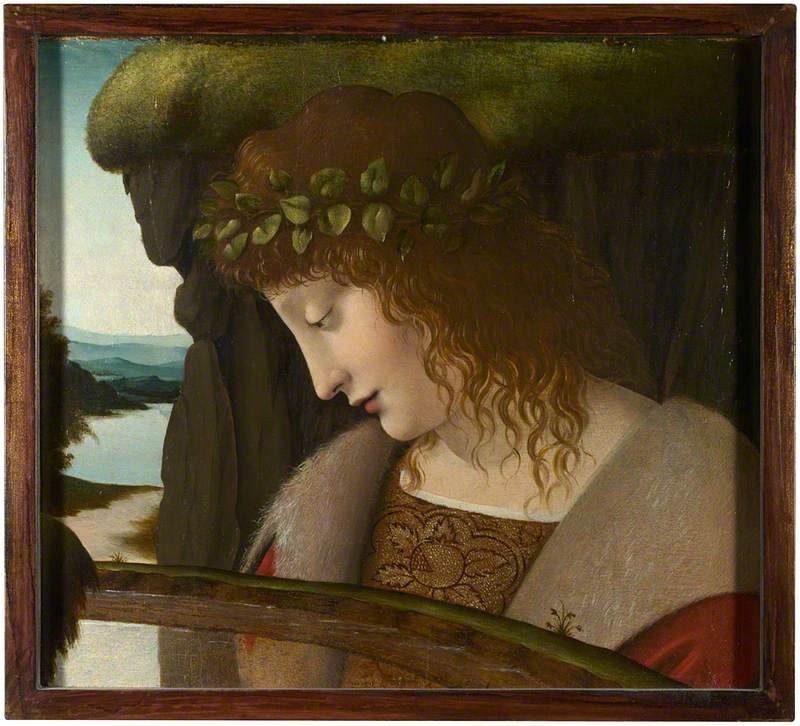
This notion of gazing at ane's reflection is parallel to the story of Narcissus, a graphic symbol from Greek mythology who fell in honey with his own beautiful reflection in a pool of water. He is and then entranced that he does non eat, potable, or sleep, and eventually kills himself due to the distraught caused by his unrequited passion. In Frank Cadogan Cowper's Vanity (1907), the youthful beauty observes herself in a handheld mirror. The vine of ripe grapes are a symbol of abundance and pleasance, but they were also often associated with carrying libido or want, suggesting that she is rewarded past her own reflection.
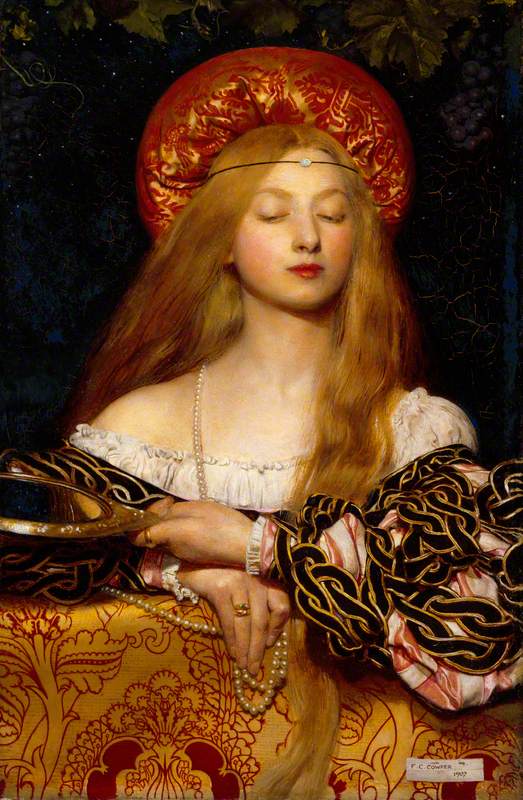
Vanity 1907
Frank Cadogan Cowper (1877–1958)
Royal Academy of Arts
Biblical stories were ofttimes used as a way to depict the tragic consequences of succumbing to the sin of wrath and anger. Peter Paul Rubens' emotionally charged canvases frequently referenced these aspects of Christian history, such as Cain Slaying Abel (1608).
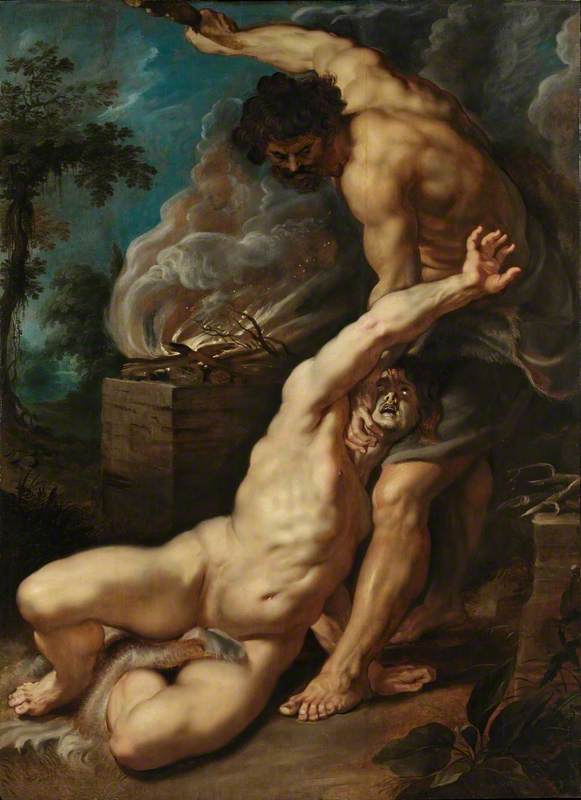
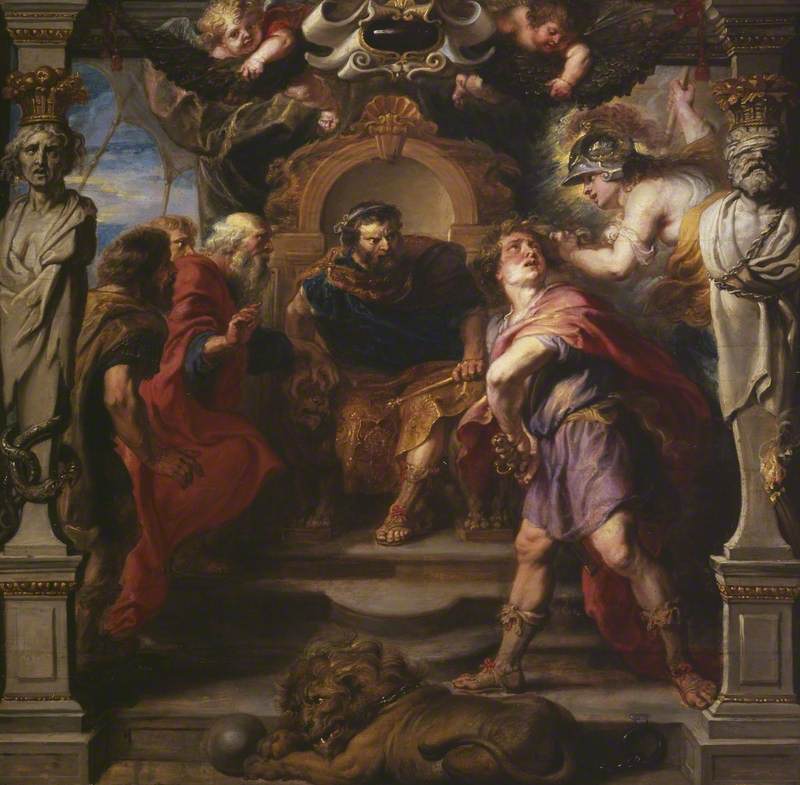
Cain, a farmer, and Abel, a shepherd, were the two sons of Adam and Eve. Both made offerings of their produce to God, who preferred Abel's, every bit he had sacrificed his all-time lambs. In a jealous rage, Cain murdered his brother and was condemned to a life of restless wandering. Rubens was also inspired by tales from classical history, as with Wrath of Achilles (1630–1635), which captures the moment where Achilles draws his sword against Male monarch Agamemnon, pre-empting their imminent violent conflict.
These acts of wrath were ofttimes instigated by another sin: the emotion of green-eyed. The story of Francesca da Rimini from Dante's ballsy poem 'Inferno', within the Divine Comedy (1320), was captured past numerous artists. In this 1837 painting by the Scottish creative person William Dyce, he portrays the moment in which the ill-fated lovers Francesca and her brother-in-law Paolo commit adultery.
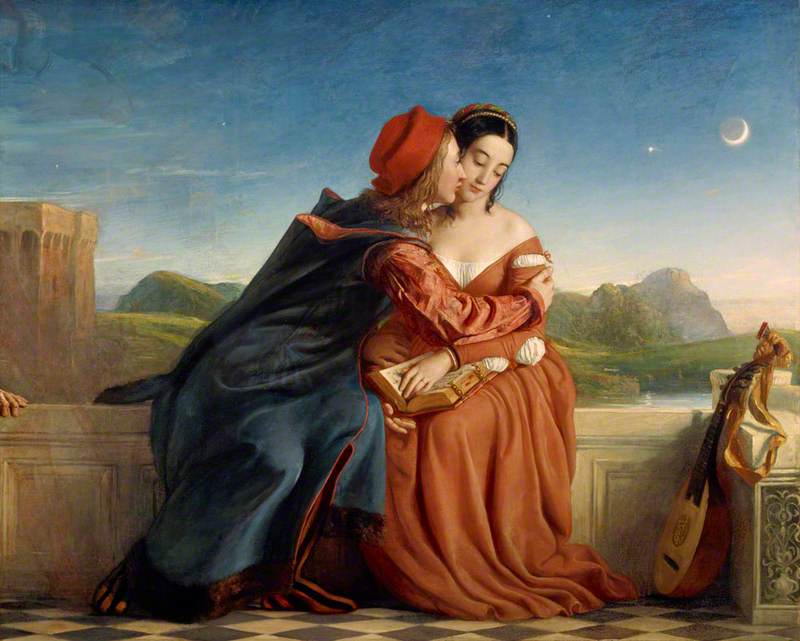
Francesca had been tricked and forced into wedlock with the fell and deformed Gianciotto da Rimini. After seeing Paolo kiss Francesca, while they were reading an account of Sir Lancelot'southward dearest for Queen Guinevere, Gianciotto surprised them, murdering both his brother and his wife. In Dyce'south painting, this tragic upshot is alluded to with the presence of Gianciotto's disembodied hand, seen on the left–paw side of the frame.
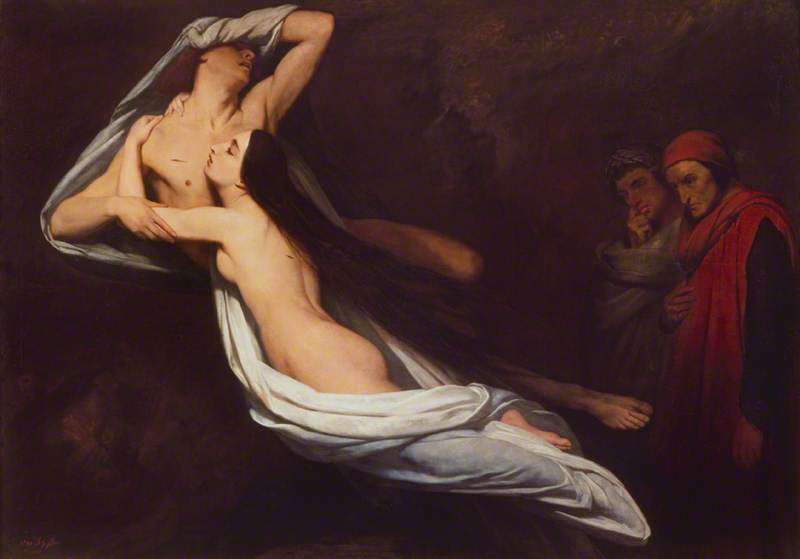
In Ary Scheffer'southward 1835 Francesca da Rimini, Scheffer shows Dante and his guide, the Roman poet Virgil, observing the tragic couple configured in a lustful tryst, at present condemned to the circle of hell. The author George Eliot said that she 'could look at it for hours'.
Philomena Epps, writer
'Sin' is showing at The National Gallery, London until January 2021
More stories
Artworks
Learning resources
carrollfortionle64.blogspot.com
Source: https://artuk.org/discover/stories/a-brief-art-history-of-the-seven-deadly-sins
0 Response to "Artwork That Represents the Seven Deadly Sins Seven Deadly Sins Art Exhibition"
Enregistrer un commentaire